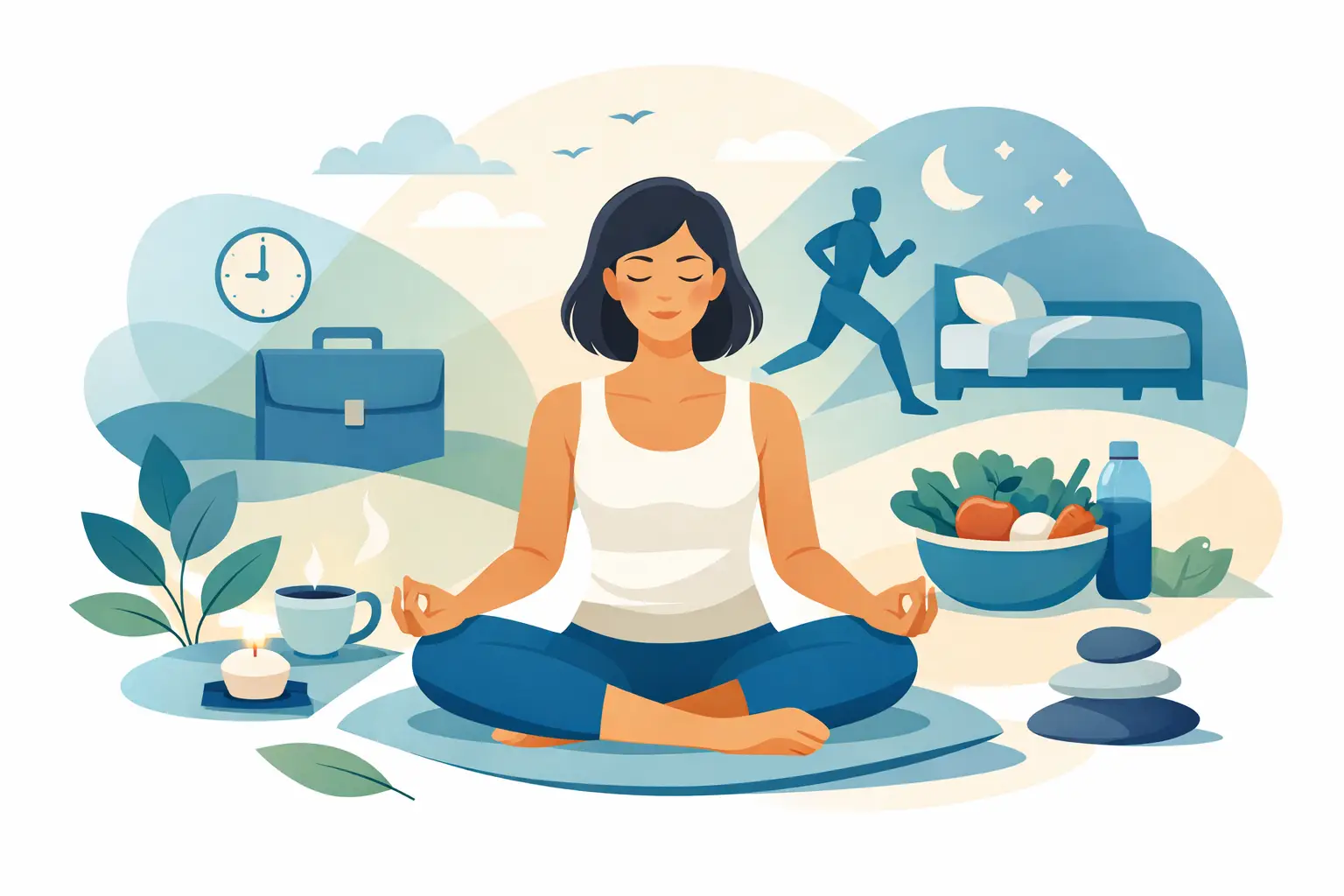
Stress is not always a sign that something is wrong with you. Often, it is the body’s understandable response to sustained demands: a full inbox, broken sleep, caring responsibilities, financial pressure, pain, or simply too little time to recover. Learning how to reduce stress naturally begins by noticing those demands and building small, repeatable ways to help your nervous system settle.
There is no single practice that suits every person. A brisk walk may feel restorative for one person and overwhelming for another who is already depleted. In Ayurveda, this individuality matters. Stress support is most useful when it considers your energy, digestion, sleep, daily rhythm, physical tension and the pressures you are carrying.
Start by creating a calmer daily rhythm
The nervous system responds well to regularity. This does not mean following a rigid wellness routine or getting every habit right. It means giving your body a few reliable signals that it is safe to slow down.
Try to wake, eat and go to bed at broadly similar times most days. A regular evening meal, reduced screen use before bed and a quieter transition into sleep can be more effective than making large changes for a few days and then abandoning them. If your evenings are busy, begin with one simple anchor, such as putting your mobile away while you eat or taking ten quiet minutes before bed.
Morning light can also help regulate your body clock. Spend a few minutes outdoors early in the day where possible, whether that is on the veranda, during a short walk or while having a cup of tea. This supports a clearer distinction between daytime activity and nighttime rest.
Use the breath to interrupt the stress response
When stress rises, breathing often becomes faster and shallower. You cannot always remove the source of stress immediately, but you can create a pause in your physical response to it.
Sit comfortably with both feet on the floor. Breathe in gently through the nose, then allow the exhale to be a little longer than the inhale. There is no need to force a deep breath. Continue for two to five minutes, keeping the jaw, shoulders and belly as soft as possible.
This is particularly helpful before a difficult conversation, after commuting, or when you notice yourself rushing between tasks. The goal is not to empty your mind. It is to give the body a chance to move out of constant alertness.
If slow breathing makes you feel dizzy, uncomfortable or more anxious, return to your usual breathing and choose another grounding practice. Looking around the room, placing your feet firmly on the floor, or taking a gentle walk may be a better fit.
Choose movement that restores rather than depletes
Exercise can ease stress, improve sleep and release built-up physical tension. Yet the most helpful movement depends on your current capacity. If you are exhausted, forcing yourself through intense training may leave you more wired, sore or fatigued.
Gentle yoga, walking, stretching, swimming or light strength work can all be useful. The most sustainable choice is often the one you can return to regularly. Even ten minutes of mindful movement can shift the feeling of being stuck in your head and reconnect you with your body.
Yoga is especially valuable when approached as more than a workout. Slow postures, calm breathing and a brief period of rest can support flexibility while helping you notice where tension is being held. Many people carry stress through the neck, jaw, shoulders, lower back and hips without realising how much effort those areas are holding.
Eat in a way that supports steadier energy
Stress and food habits often affect one another. When life is demanding, it is easy to skip meals, rely on caffeine or eat quickly at a desk. This can lead to energy crashes, digestive discomfort and greater irritability later in the day.
Aim for regular, satisfying meals that include protein, fibre-rich carbohydrates, vegetables or fruit, and nourishing fats. Warm, simply prepared meals can feel particularly settling when digestion is sensitive. Rather than trying to follow a perfect diet, pay attention to patterns: Do you feel shaky after too much coffee? Does a long gap between meals make you impatient or anxious? Does eating late affect your sleep?
Caffeine deserves an honest look. For some people, one morning coffee is fine. For others, several coffees or energy drinks can intensify a racing heart, restlessness and poor sleep. Reducing caffeine gradually and avoiding it later in the day is often more manageable than stopping suddenly.
Make room for mental recovery
Many people rest physically while remaining mentally on call. They scroll, answer messages, plan tomorrow’s tasks and absorb more information late into the evening. A short period without demands can make a meaningful difference.
Create a small daily boundary around work and worries. Write down the tasks that need attention tomorrow, then allow yourself to leave them there for the night. If thoughts continue to circle, a simple practice of meditation or quiet observation can help. Notice the thought, name it as planning or worrying, and return attention to the breath, sounds around you or the sensation of sitting.
You do not need to meditate for half an hour to benefit. Five consistent minutes is a strong beginning. Some people prefer guided meditation, while others find repetitive activities such as gardening, knitting, cooking or walking more calming. The right practice is the one that leaves you feeling more present, not pressured to perform relaxation correctly.
Address the physical side of stress
Stress commonly has a physical expression. Headaches, clenched teeth, a tight chest, tense shoulders, fatigue and disturbed sleep can all be part of the picture. While massage cannot remove every cause of stress, hands-on therapy may help ease muscular tension and create space for deeper rest.
The appropriate treatment depends on what your body needs. Remedial massage, deep tissue massage, trigger point therapy and myofascial release may suit persistent muscular tightness when provided thoughtfully. Relaxation massage may be preferable when the main need is to settle and rest. Lymphatic drainage and cupping therapy may be considered in particular circumstances, following an individual assessment.
In Ayurvedic practice, traditional therapies are paired with lifestyle guidance rather than treated as an isolated indulgence. Shirodhara, which involves a steady flow of warm oil over the forehead, is used by some people as a deeply calming treatment. Its suitability should be discussed with a qualified practitioner, especially if you have a health condition, skin concern or are pregnant.
Personalise your stress support with Ayurveda
Ayurveda views wellbeing through balance across body, mind, environment and routine. An Ayurvedic consultation may explore your sleep, appetite, digestion, mood, energy, workload and habits before recommending appropriate lifestyle changes, yoga, meditation, body therapies or herbal support.
Herbal remedies are not automatically suitable simply because they are natural. They can interact with medicines and may not be appropriate during pregnancy, breastfeeding or with certain health conditions. Personalised guidance is particularly valuable if stress is affecting several areas of your health or you have already tried general advice without lasting change.
At Herbal Ayurveda and Yoga Clinic in Adelaide, care is guided by a qualified Ayurvedic practitioner and tailored to the person rather than a standard stress-relief package. This approach can be useful when you want support that considers both physical tension and the daily habits that may be keeping your system overstimulated.
Know when to seek further help
Natural strategies can be a meaningful part of stress care, but they are not a substitute for medical or psychological support when symptoms are severe or persistent. Speak with your GP or a qualified mental health professional if anxiety, low mood, panic, insomnia, pain or exhaustion is affecting your ability to function, work or maintain relationships.
Seek urgent help if you are having thoughts of harming yourself or feel unable to stay safe. Reaching out is a practical act of care, not a failure of resilience.
Start with the smallest change that feels realistic this week. A calmer cup of tea, a ten-minute walk, an earlier bedtime or a few slower breaths may seem modest, but repeated gently, these practices help create the conditions in which the body can recover.
Leave a Reply