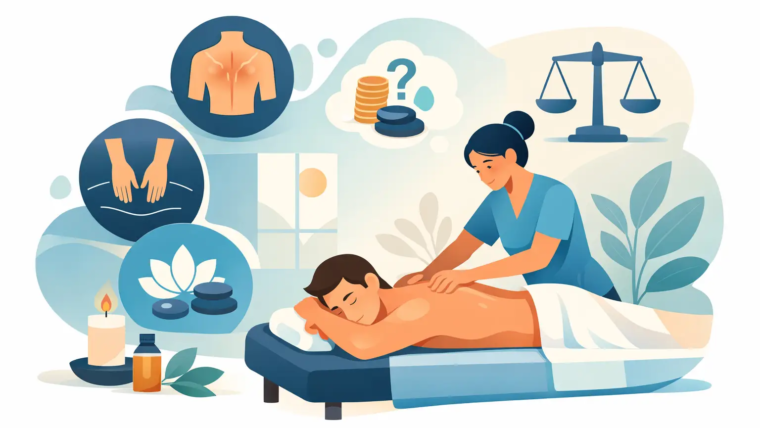
By 3 pm, many office workers are not simply tired. Their neck feels heavy, the shoulders are creeping towards the ears, the lower back is tight, and even the wrists can start to ache. Massage for desk job pain can be genuinely helpful here, not as a quick indulgence, but as part of practical care for a body that has spent too many hours in one position.
Desk work creates a very particular pattern of strain. It is rarely one dramatic injury. More often, it is a steady build-up of tension through the neck, upper back, shoulders, jaw, hips and forearms. Over time, that constant low-level load can affect sleep, focus, exercise tolerance and general wellbeing. For many people, the discomfort becomes so familiar that they stop noticing how much it is shaping the day.
Why desk work creates this kind of pain
A desk job is often described as sedentary, but that word can be misleading. Sitting for long periods is not neutral rest. It places repeated demand on postural muscles, especially when the screen is too low, the chair does not support the body well, or stress causes a person to brace through the shoulders and chest.
The neck commonly bears the brunt. A forward head position increases strain through the cervical spine and the muscles around the base of the skull. This can contribute to headaches, shoulder tightness and a sense of stiffness when turning the head. The upper back may feel rigid, while the chest gradually shortens from hours spent rounded over a keyboard.
The lower body is affected as well. Long sitting can leave the hip flexors tight and the gluteal muscles underused, which changes how the pelvis sits and may feed into lower back discomfort. Even the forearms and hands can become overloaded from repetitive mouse and keyboard use.
There is also the nervous system to consider. Work stress often shows up physically. Some people clench the jaw, breathe shallowly, or unconsciously hold tension all day. In those cases, pain is not only a matter of posture. It is also a matter of how the body is responding to pressure.
How massage for desk job pain can help
Massage works best when it is matched to the pattern of strain rather than applied in a generic way. For desk-based tension, the aim is usually to reduce muscle guarding, improve circulation, support mobility and help the body shift out of a constant state of bracing.
A well-considered treatment may ease tightness through the neck and shoulders, release the upper back, soften overworked forearms and address the lower back and hips. Many people also notice they breathe more freely after treatment, which is not a small thing. Better breathing can reduce the sense of compression through the chest and support a calmer overall state.
That said, massage is not a cure-all. If someone returns to the same workstation setup, never takes movement breaks and is under ongoing stress, the tension often rebuilds. Massage is most effective when it sits within a broader approach that includes posture awareness, movement, rest and realistic changes to work habits.
Choosing the right type of treatment
Not all bodywork feels the same, and desk-related pain does not always need a very firm approach. The right treatment depends on the person, the chronicity of the problem and how the body is presenting on the day.
Remedial and deep tissue work
Remedial massage is often suitable when pain is linked to clear muscular tightness, postural strain or restricted movement. It allows treatment to be directed towards specific problem areas rather than offering a purely general relaxation experience. Deep tissue massage can be useful when layers of tension have built up over time, especially through the upper back, hips or shoulders, though more pressure is not always better. Some bodies respond well to firm treatment, while others tighten against it.
Trigger point and myofascial release therapy
Trigger point therapy may help when there are very localised tender spots that refer pain into other areas, such as points around the shoulder blade sending discomfort into the neck or arm. Myofascial release can be valuable when the body feels generally bound up, restricted or stiff rather than acutely painful in one exact place. This approach often suits people who describe feeling compressed and limited after long hours at a desk.
Relaxation massage when stress is part of the picture
If desk pain is strongly tied to stress, poor sleep or nervous system overload, relaxation massage can be more therapeutic than people expect. A calmer treatment may reduce muscle guarding and give the body a chance to settle. In some cases, this creates better results than pushing into already irritated tissue.
When massage helps most – and when it may not be enough
Massage is often most helpful for dull aching, muscular tightness, reduced range of motion, tension headaches linked to the neck and shoulders, and general discomfort that worsens with prolonged sitting. It can also support recovery when someone has started exercising again after years of desk work and discovers how stiff the body has become.
But there are situations where massage should not be the only answer. Numbness, tingling, weakness, pain travelling down the arm, persistent headaches, dizziness, or sharp pain that does not ease with rest may point to something more complex. In those cases, an assessment is important so treatment can be properly guided.
This is where a practitioner-led setting makes a difference. Individualised care matters because desk job pain is not identical from one person to the next. One client may need focused muscular work. Another may need a gentler approach alongside advice around movement, yoga-based support or broader lifestyle measures.
Making treatment more effective between appointments
The best results usually come from what happens between sessions. Small changes done consistently tend to matter more than one perfect stretch performed once.
Movement breaks are one of the simplest tools. Standing up every 30 to 60 minutes, even briefly, can reduce the load that builds through the spine and hips. A short walk, shoulder rolls, chest opening, or gentle neck movement often helps more than people expect. The goal is not to create a full exercise class in the office. It is to interrupt stillness before stiffness sets in.
Workstation setup also matters, though people do not need a flawless ergonomic arrangement to feel better. A screen at a sensible height, feet supported, elbows relaxed and the keyboard positioned to avoid excessive reaching can all reduce strain. If someone works from a laptop all day, even a few simple adjustments may make treatment last longer.
Breathing is another overlooked factor. Shallow breathing keeps the upper chest and neck working harder than they need to. Slower diaphragmatic breathing, particularly during stressful periods, can reduce unnecessary tension around the shoulders and jaw.
A more holistic view of desk-related tension
From an Ayurvedic perspective, pain and tension are not only local mechanical issues. Routine, stress, sleep, digestion and mental load can all influence how the body holds strain. Someone who is overextended, under-rested and mentally scattered often presents very differently from someone with the same desk setup but a steadier daily rhythm.
This broader view can be useful for people whose symptoms keep returning despite stretching and occasional massage. Sometimes the missing piece is not another stronger treatment. It may be a more personalised understanding of what is driving the pattern – long work hours, irregular meals, poor recovery, depleted energy, anxious sleep, or a lack of grounding movement.
At Herbal Ayurveda and Yoga Clinic in Adelaide, this individual approach is central to care. For some people, massage is the right starting point. For others, it works best alongside yoga-based support, Ayurvedic guidance or treatment choices tailored to both the body and the broader lifestyle picture.
What to expect from massage for desk job pain
A good session should leave you feeling more at ease in your body, not beaten up by it. It is normal to notice some tenderness in worked areas, especially if the muscles have been tight for a long time, but treatment does not need to be aggressive to be effective. Clear communication matters. If pressure feels too much, if a position aggravates symptoms, or if pain is radiating, that should guide the session.
Frequency depends on the issue. Someone in an acute flare may benefit from closer sessions at first, while another person may do well with occasional maintenance combined with home care. There is no single correct schedule. The body, workload and goals all influence what is sensible.
If your work leaves you stiff, sore and mentally wound up by the end of the day, that discomfort is worth addressing early. Desk job pain tends to settle more easily when it is managed before it becomes your normal.