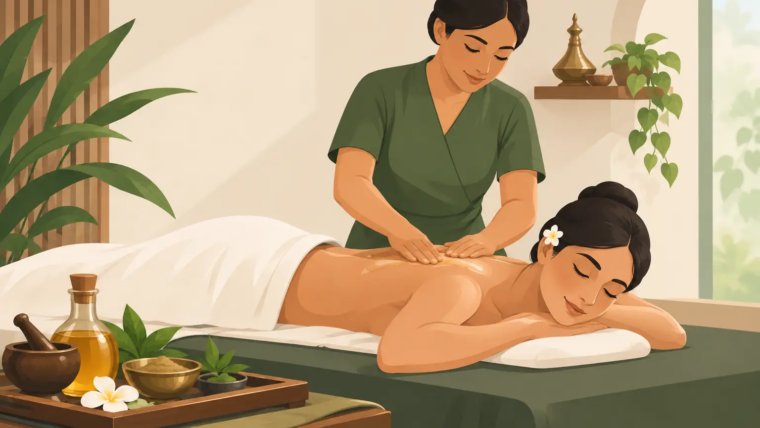
Stress rarely arrives all at once. More often, it builds quietly – tight shoulders after long hours at work, restless sleep, a busy mind that does not properly switch off, digestion that feels unsettled, and a general sense of being out of balance. Ayurvedic massage for stress relief is valued because it addresses this pattern as a whole, rather than treating tension as a problem isolated to one part of the body.
In Ayurveda, stress is not viewed only as a mental or emotional issue. It can affect sleep, energy, digestion, mood, muscular tension and daily resilience. This is why traditional Ayurvedic body therapies are used with a broader purpose in mind: to calm the nervous system, nourish the tissues, improve circulation and support the body’s natural capacity to return to balance. For many people, that approach feels very different from a standard relaxation massage.
What makes Ayurvedic massage different?
Ayurvedic massage is a traditional therapeutic treatment based on the principles of Ayurveda, the classical healing system of India. The method typically uses warm herbal oils, specific massage techniques and an individualised approach guided by the person’s constitution, current state of imbalance and treatment goal.
That individualisation matters. Two people may both say they feel stressed, yet present very differently. One may feel anxious, scattered and unable to settle. Another may feel irritable, overheated and mentally overdriven. A third may feel flat, heavy and exhausted. In Ayurvedic thinking, these are not identical patterns, so they may not benefit from exactly the same treatment style or oil selection.
This is one reason a practitioner-led clinic can offer something more considered than a one-size-fits-all spa menu. The aim is not simply to provide pleasant touch, although comfort is certainly part of the experience. The aim is to apply therapy in a way that supports the person in front of you.
How Ayurvedic massage for stress relief works
Ayurvedic massage for stress relief works through several overlapping effects. The first is the obvious one: skilled, rhythmic touch can help reduce muscular tightness and invite the body out of a guarded state. When the body softens, the mind often follows.
The second effect comes from the use of warm oil. In Ayurveda, oil is not only a lubricant. It is used therapeutically to soothe dryness, ground nervous agitation and nourish the body. For clients who feel depleted, overstimulated or run down, this can be especially supportive.
There is also a sensory effect that should not be underestimated. Warmth, steady rhythm, a quiet treatment setting and focused practitioner attention can help interrupt the cycle of constant mental activation. Many people spend much of the day responding – to work demands, screens, notifications, family needs and internal pressure. A well-delivered Ayurvedic treatment creates a rare period in which the system can stop bracing.
From an Ayurvedic perspective, stress often aggravates Vata qualities such as dryness, movement, irregularity and nervous overstimulation. In practical terms, this may show up as anxious thinking, light sleep, restlessness, variable digestion, fatigue and body aches. In these cases, warm oil massage is often used to bring steadiness and calm. But it depends on the individual. If heat, inflammation or irritation are more prominent, treatment choices may be adjusted accordingly.
The role of oils, technique and assessment
A meaningful Ayurvedic treatment begins with assessment. Rather than assuming every stressed client needs the same routine, the practitioner considers factors such as body type, sleep, energy, digestion, emotional state, current symptoms and lifestyle patterns. This helps shape the treatment.
The oils selected may differ according to need. Some herbal oils are traditionally used for calming and grounding, while others may be chosen for muscular stiffness, fatigue or constitutional support. The temperature of the oil, the pressure used and the pace of the massage can also be adapted.
Technique matters as much as oil. For someone who feels wired and unable to slow down, broad, rhythmic strokes may help settle the system. For a person carrying significant physical tension, more focused work may be included. For another client, the most helpful treatment may combine body massage with therapies that emphasise deep mental calm, such as Shirodhara. This is where practitioner judgement becomes important. Stress relief is not always about doing more. Sometimes it is about choosing the right level of therapy for a body that is already overloaded.
Benefits people commonly notice
The immediate appeal of Ayurvedic massage is that people often feel calmer after treatment, but the benefits can extend beyond that first sense of relief. Some clients notice improved sleep, less muscular tension, quieter thoughts and a greater sense of emotional steadiness. Others report feeling more grounded, especially if stress has left them feeling scattered or disconnected from their body.
There can also be secondary benefits. When stress reduces, digestion may improve, breathing may become easier and energy may feel more stable. This does not mean one massage solves every stress-related issue. If someone is under sustained pressure, sleeping poorly and running on caffeine and adrenaline, treatment works best as part of a broader plan. Ayurveda has always taken that wider view.
It is also worth being realistic. Some people feel deeply relaxed straight away. Others take a session or two to settle, especially if they are very tense or unaccustomed to slowing down. The body does not always switch from high alert to calm on command. Gentle consistency often matters more than intensity.
When a personalised approach matters most
Stress can look deceptively simple from the outside. A person may book a massage because they feel tense, but the underlying picture may include burnout, irregular eating, poor sleep, digestive disturbance, emotional strain or long periods of mental overwork. If those patterns are not recognised, treatment may feel pleasant without being especially effective.
This is where a personalised Ayurvedic approach becomes useful. A practitioner can look at what is driving the stress response and whether body therapy should be paired with lifestyle guidance, herbal support, breathing practices or simple routines that encourage recovery between appointments.
At Herbal Ayurveda and Yoga Clinic, this practitioner-led model is central to care. Rather than treating massage as an isolated service, the focus is on the person as a whole. For clients seeking natural support for stress, that can be reassuring. It means the treatment is not only about the hour on the table, but about how to create better balance in daily life as well.
What to expect from Ayurvedic massage for stress relief
For those new to Ayurveda, the experience is usually both therapeutic and deeply settling. Treatment commonly involves warm herbal oil applied across the body using structured massage techniques. Depending on the treatment style and your needs, attention may be given to the scalp, neck, shoulders, limbs, back and feet.
You should expect the practitioner to ask relevant questions before treatment, particularly if the session is part of a broader Ayurvedic consultation. This may include your current stress levels, sleep quality, digestion, work patterns and general health. These details help guide treatment choices.
Afterwards, many people feel calm, heavy in a pleasant way, or ready for rest. It is often wise to keep the remainder of the day quiet where possible. A rushed return to emails, traffic and errands can undo some of the settling effect. Hydration, warm food and a lighter schedule tend to support a better response.
Is it right for everyone?
Ayurvedic massage can be very supportive for stress, but not every approach suits every person at every time. If someone is acutely unwell, has certain medical conditions, a fever, skin irritation, injury or other contraindications, treatment may need to be postponed or modified. Pregnancy, chronic health issues and current medication use should also be discussed with the practitioner.
There is also the question of preference. Some people love oil-based therapies immediately. Others need time to become comfortable with a slower, more inward treatment style. That is normal. Effective care should feel appropriate, not imposed.
For people living with persistent stress, anxiety or exhaustion, the best results often come when massage is part of a broader supportive plan. That may include consultation, yoga-based practices, meditation or other traditional therapies chosen according to the individual. The value of Ayurveda lies in this integration.
A well-timed treatment can do more than provide a brief exhale. It can remind the body what calm feels like again, which is often the first step towards restoring balance in a more lasting way.