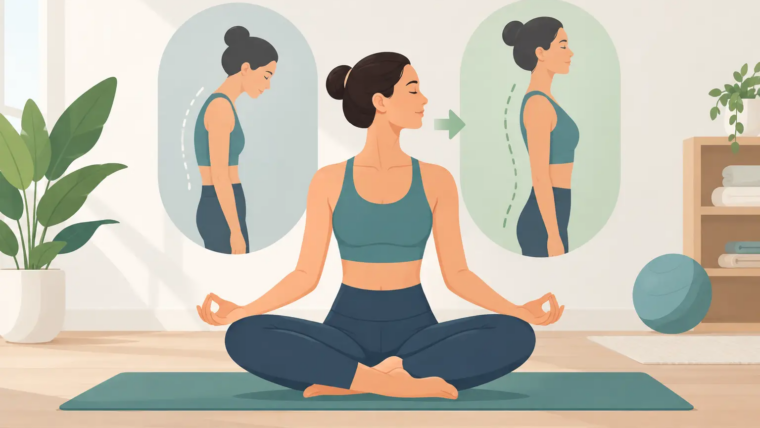
A neck that feels tight by mid-afternoon is rarely just a neck problem. Hours at a screen, a hurried lunch, shallow breathing and a workday spent in one position can all build tension through the shoulders, upper back and jaw. Gentle workplace stretches for neck tension can offer welcome relief, particularly when they are paired with small changes to how you sit, move and pause.
The aim is not to force the neck into a deep stretch or chase a dramatic crack. A better approach is slow, comfortable movement that gives overworked muscles a chance to soften. These practices can be done beside your desk, in a quiet meeting room or even while waiting for the kettle to boil.
Why desk work can tighten the neck
The neck is designed to move frequently. When your head stays angled towards a laptop, mobile or second screen for long periods, the muscles around the neck and upper shoulders work continuously to hold it steady. The body often responds by lifting the shoulders, rounding the upper back or tightening the jaw.
Stress can add another layer. When concentration is high or deadlines are close, breathing may become shorter and the shoulders can gradually creep towards the ears. You may not notice until you turn your head while reversing the car or wake with a stiff neck the following morning.
From a holistic perspective, this is a useful reminder that discomfort is influenced by more than one area of the body. Neck tension may relate to workstation habits, sleep position, workload, hydration, exercise, stress levels or a combination of these factors. Stretching is helpful, but it works best as one part of a broader daily routine.
Workplace stretches for neck tension to try gently
Before beginning, sit or stand tall without becoming rigid. Let your feet rest firmly on the floor and take two unhurried breaths. Keep every movement within an easy range. You should feel mild lengthening, not sharp pain, tingling or numbness.
1. Chin nods
Look straight ahead and gently draw your chin backwards, as though creating a small double chin. Keep your eyes level rather than tipping your head down. Hold for three to five slow breaths, then release. Repeat five to eight times.
This small movement can help counter the forward-head position common during computer work. It should feel subtle. If you feel strain at the base of the skull, reduce the range.
2. Side neck release
Allow your right ear to move gently towards your right shoulder. Keep both shoulders relaxed and avoid lifting the right shoulder to meet the ear. Stay for three slow breaths, then return to centre and repeat on the other side.
For a little more support, rest the hand lightly on top of the head. Do not pull. The weight of the hand alone is generally enough. This stretch often reaches the muscles that run from the side of the neck into the top of the shoulder.
3. Diagonal neck stretch
Turn your face slightly towards your right armpit, then allow your chin to lower a little. You may feel a comfortable stretch along the left back corner of the neck. Hold for several calm breaths before changing sides.
This is useful for people who feel a tight band from the base of the skull towards the shoulder blade. Keep the movement gentle, especially if you are prone to headaches or jaw tension.
4. Shoulder rolls with breath
Breathe in as you lift both shoulders slowly towards your ears. Breathe out as you roll them back and down. Continue for six to ten rounds, allowing the exhale to be a little longer than the inhale.
The movement is simple, but the breathing matters. A long, easy exhale can help reduce the unconscious bracing that often settles in the upper body during stressful work.
5. Chest-opening desk stretch
Stand facing your desk and place your hands on its edge, about shoulder-width apart. Step back and hinge gently from the hips, allowing your chest to move between your upper arms. Keep your knees soft and avoid forcing the shoulders.
Hold for three to five breaths. This can create space across the chest and front of the shoulders, areas that commonly shorten when we sit leaning towards a screen. If your desk is unstable or on wheels, choose a wall instead.
6. Seated upper-back rotation
Sit near the front of your chair with both feet grounded. Cross your arms over your chest and slowly rotate your upper body to the right, keeping the hips mostly still. Pause for a breath, return to centre, then turn left. Repeat four to six times each way.
A stiff upper back can make the neck work harder to turn and look around. Restoring some comfortable movement through the thoracic spine may therefore reduce the load carried by the neck.
A two-minute reset is often more useful than one long stretch
Doing a single, intense stretching session at the end of the day may feel satisfying, but it does not always address the long periods of stillness that caused the tension. For many office workers, brief movement breaks every 30 to 60 minutes are more sustainable.
Try linking a reset to a normal work cue: after sending a report, before a video call or whenever you refill your water bottle. Stand, look away from the screen, roll the shoulders and take a few slow breaths. The habit does not need to be perfect to be beneficial.
It also helps to vary your working position. Raise your screen so you are not continually looking down, bring the keyboard close enough that you do not reach through the shoulders, and use a headset rather than trapping a phone between your ear and shoulder. There is no single ideal posture to hold all day. The most supportive posture is usually the next comfortable position, with regular movement in between.
When stretching is not the full answer
Neck tension often improves with regular movement, rest and attention to work habits. However, persistent discomfort deserves a closer look. If tension returns each day despite changes to your routine, a tailored assessment can help identify contributing patterns in the neck, shoulders, upper back and lifestyle.
Remedial massage, deep tissue massage, myofascial release and trigger point therapy may be considered where appropriate to address muscular restriction. The right approach depends on the person. Deep pressure can feel helpful for some people, while others respond better to a gentler treatment combined with mobility work and relaxation. More pressure is not automatically better.
If neck pain follows an accident or fall, is severe, travels down the arm, causes weakness, numbness, dizziness or a new severe headache, seek prompt medical advice rather than trying to stretch through it. The same applies if symptoms are worsening or affecting sleep and daily function.
Supporting the neck beyond the desk
A calm evening routine can make a difference to how the neck feels the next day. Consider how you unwind after work: prolonged scrolling with the head bent forward may simply continue the same pattern from the office. A short walk, gentle yoga, relaxed breathing or lying down with the phone out of reach may give the body a more genuine transition.
Adequate sleep, regular meals and hydration also support recovery. In Ayurvedic care, daily rhythms and individual constitution are considered alongside local symptoms. This whole-person view can be particularly valuable when neck tightness appears alongside poor sleep, stress, fatigue or digestive disruption.
At Herbal Ayurveda and Yoga Clinic, personalised care may combine lifestyle guidance with yoga-based wellness support and hands-on therapies according to the individual’s needs. The purpose is not merely to temporarily ease a tight muscle, but to support patterns that are practical to maintain in everyday life.
Start with one or two movements that feel comfortable, repeat them often enough to become familiar, and let your body guide the pace. Small pauses during the working day can become a quiet and effective form of care.