A clenched jaw at the desk, shoulders that sit close to the ears, a restless night after a demanding day – tension often arrives quietly before it becomes hard to ignore. This guide to tension release takes a whole-person approach: easing what the body is holding while considering the habits, workload, sleep and stress patterns that may be feeding it.
Tension is not always a sign that something is seriously wrong. It can be a normal response to concentration, physical effort, emotional strain or unfamiliar movement. But when it becomes a daily pattern, it may affect comfort, mobility, mood and energy. Gentle, consistent care can help the nervous system settle and give the body more opportunity to recover.
What tension can feel like in daily life
Muscular tension commonly appears through the neck, shoulders, upper back, hips, jaw and lower back. Some people notice a dull ache by late afternoon. Others feel headaches, shallow breathing, reduced range of movement, fatigue or the sense that they cannot fully switch off.
The cause is rarely just one thing. A long commute, a poorly arranged workstation, repetitive work, disrupted sleep, training without enough recovery and prolonged worry can all contribute. There are also times when tension has a medical cause or follows an injury, which is why a personalised assessment matters more than a one-size-fits-all routine.
From an Ayurvedic perspective, stress and irregular routines can disturb the body’s natural balance. When the mind is busy and the day lacks pauses, the body may become dry, tight, over-alert or depleted. Ayurvedic care considers these individual patterns alongside physical symptoms, rather than treating a tight shoulder as an isolated problem.
Begin with a pause, not a forceful stretch
When muscles feel tight, the instinct is often to stretch hard or push through discomfort. That can be useful in some circumstances, but it is not always the answer. If the body is guarding because it feels tired, stressed or irritated, forceful movement may make it resist further.
Start by noticing where you are holding effort. Sit with both feet supported, allow your hands to rest, and take three slower breaths. Let the exhale be slightly longer than the inhale without straining. On each exhale, soften the tongue, jaw and shoulders. This is simple, but it sends a different message to a body that has been bracing all day.
Then add small movements. Roll the shoulders slowly, turn the head only within a comfortable range, open and close the hands, or stand and gently shift weight from one foot to the other. The aim is not to achieve a dramatic release. It is to restore movement and awareness before stiffness becomes more fixed.
A practical guide to tension release through the day
A short practice done regularly is often more valuable than an occasional, lengthy session. The following approach can fit around work, family life and existing exercise.
Create movement breaks that are realistic
Aim to change position at regular intervals, particularly if you work at a computer, drive for long periods or perform repetitive tasks. Two minutes of walking, reaching, gentle spinal movement or simply looking away from the screen can interrupt the habit of holding the same posture.
The best interval depends on your work. Someone with an active job may need moments of stillness and breathing, while someone seated for most of the day may benefit from more frequent standing and walking. Avoid treating posture as something to hold rigidly. Variety is usually more helpful than trying to maintain one ‘perfect’ position.
Use breath to settle the stress response
Stress can make breathing quick and high in the chest, which may add to neck and shoulder effort. Try breathing in comfortably through the nose, then breathing out slowly and smoothly. Continue for one or two minutes.
If you feel light-headed, return to normal breathing. Breath practices should feel calming, not demanding. People with respiratory conditions, panic symptoms or other health concerns may benefit from guidance tailored to their circumstances.
Choose yoga that meets your energy level
Yoga can support tension release by combining mindful movement, breathing and rest. On an exhausted day, a quiet practice with supported positions, gentle twists and relaxation may be more suitable than a vigorous class. On another day, stronger postures may help you feel grounded and mobile.
A useful question is: do I need more energy, or do I need to slow down? The answer can guide the practice. Moving with attention to the breath can be more therapeutic than trying to reach a particular shape or level of flexibility.
Support recovery after activity
Tension is not limited to office work. Gardening, lifting, sport, caring responsibilities and physical work can all leave the body feeling overloaded. After exertion, give yourself a few minutes to cool down, drink water, eat regular nourishing meals and prioritise sleep where possible.
Heat may feel soothing for general muscular tightness, while gentle self-massage with warm oil can be a calming Ayurvedic ritual for some people. However, avoid applying heat or firm pressure to a fresh injury, an area of swelling, unexplained pain or inflamed skin without appropriate advice.
When hands-on therapy may help
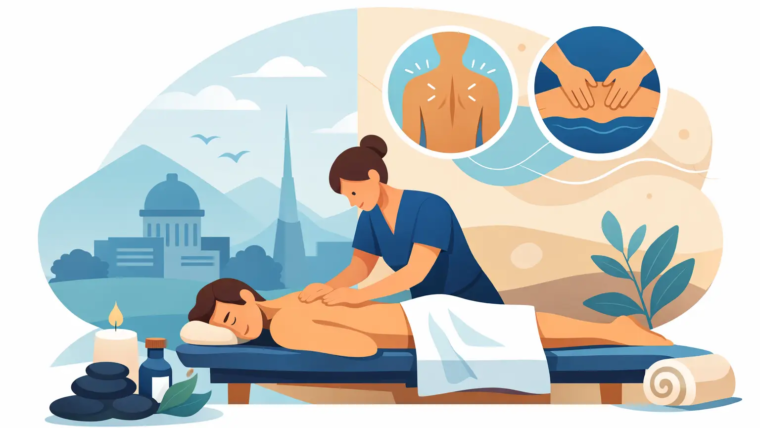
Massage and manual therapies can be valuable when tension persists despite sensible changes to movement and rest. They may support circulation, comfort, body awareness and a sense of relaxation. Just as importantly, a skilled practitioner can adapt pressure and technique to your needs on the day.
Remedial massage may be appropriate when muscular discomfort is affecting daily function or movement. Deep tissue massage can be useful for some longstanding patterns, but deeper is not automatically better. Excessive pressure may leave an already sensitive body more guarded, so treatment should be adjusted according to your response.
Trigger point therapy may help address highly localised, tender areas that refer discomfort elsewhere. Myofascial release uses sustained, considered techniques to work with restricted or uncomfortable connective tissue. Cupping therapy may be included where suitable, while lymphatic drainage uses a much lighter approach and is intended for different goals than deep muscular work.
Relaxation massage has an equally valid place in tension care. When stress is the main driver, a calming treatment may help the body move out of a constant state of alert. The right treatment depends on your health history, symptoms, preferences and what your body can comfortably receive.
At Herbal Ayurveda and Yoga Clinic, care is guided by an individual consultation rather than a standard sequence of treatments. Ayurvedic lifestyle considerations, yoga-based support and traditional therapies can be considered alongside remedial and relaxation-focused massage, with recommendations tailored to the person rather than the symptom alone.
Look beyond the tight area
A tight neck may be influenced by screen height, but also by interrupted sleep, skipped meals, shallow breathing or a demanding period at work. Likewise, hip or lower-back tension may relate to sitting, training load, footwear, stress or movement habits. Treating only the sorest spot can bring temporary relief, yet a broader approach often gives more lasting support.
Consider the rhythms of your week. Are meals regular? Is there enough time between work and sleep to unwind? Do you have movement that you enjoy, not just exercise you feel obliged to complete? Are you carrying stress without a regular way to process it? Small adjustments in these areas can reduce the conditions that encourage tension to return.
Ayurvedic guidance may include individual suggestions around daily routine, nourishment, rest, self-massage, meditation or herbal support where appropriate. Herbal recommendations should always be personalised, especially for people who are pregnant, managing a health condition or taking prescribed medicines.
When to seek medical advice
Do not assume all pain is ordinary tension. Seek prompt medical assessment for sudden or severe pain, chest pain, shortness of breath, weakness, numbness, dizziness, fever, unexplained weight loss, changes in bladder or bowel control, or pain after significant trauma. Persistent symptoms that are worsening or disrupting sleep also deserve clinical attention.
Complementary therapies can sit alongside conventional healthcare, but they should not replace diagnosis or urgent care when it is needed. A qualified practitioner will take relevant health information into account and refer you onwards when appropriate.
Tension release is rarely about finding one perfect technique. It is about listening earlier, responding more gently and building a rhythm of care that your body can sustain. A few quiet minutes, more varied movement and treatment that respects your individual needs can gradually make room for greater ease.