A stiff neck after desk work, an aching lower back on the drive home, or shoulders that creep towards the ears during a stressful week are common signs that the body is working harder than it needs to. This guide to posture correction takes a calmer approach: not chasing a perfectly straight shape, but improving awareness, movement and daily habits so your body has more options.
Good posture is not a pose to hold all day. It is the ability to move, rest and work with less unnecessary strain. For many people, the most helpful change is not standing rigidly upright. It is learning when to shift position, strengthen gently and respond to tension before it becomes persistent discomfort.
What posture correction really means
Posture is the position your body takes while sitting, standing, walking and sleeping. It is influenced by your work set-up, movement history, stress levels, strength, mobility, vision, footwear and even how well you have slept. A long day at a computer can encourage the head to move forward and the upper back to round, while prolonged standing may fatigue the feet, hips and lower back.
There is no single ideal posture that suits every person. Bodies vary, and a naturally curved spine is normal. The aim is not to flatten those curves or pull the shoulders back with constant force. Instead, posture correction should help you find a more supported, adaptable position and build the capacity to move out of it regularly.
From an Ayurvedic perspective, the body and mind influence one another. Stress can show up as held tension in the jaw, chest, shoulders or abdomen. Equally, ongoing physical discomfort can affect sleep, mood and energy. Addressing posture well therefore involves more than a quick stretch. It calls for attention to routines, recovery and the whole person.
Start by noticing your daily patterns
Before trying to correct anything, observe when discomfort appears. Notice whether symptoms increase after sitting, standing, driving, lifting, scrolling on your mobile or sleeping in a certain position. Also consider whether the issue is worse during busy or emotionally demanding periods.
A simple self-check can be useful. When standing, let your arms rest naturally and feel where your weight falls through your feet. Are you gripping your toes? Locking your knees? Holding your breath? When sitting, ask whether your lower back, pelvis and feet are supported. These observations are more useful than judging your body in a mirror.
Keep the check gentle. Repeatedly pulling yourself into an exaggerated ‘good posture’ can create more tension through the ribs, neck and lower back. A better cue is to lengthen through the crown of the head, soften the shoulders and allow the breath to move freely.
Guide to posture correction at work and home
Your environment can either support your body or ask it to compensate for hours. Small adjustments are often more sustainable than replacing every item of furniture.
When seated, aim to have your feet supported on the floor or a stable footrest, with your hips comfortably back in the chair. Your screen should be high enough that you are not continually bending your neck down. Bring the keyboard and mouse close enough that your elbows can rest near your sides rather than reaching forward.
If you work from a laptop, an external keyboard and a raised screen can make a meaningful difference. If that is not available, vary your set-up and take brief movement breaks more often. A perfect ergonomic chair will not offset six uninterrupted hours in one position.
For standing tasks, distribute weight across both feet and avoid leaning into one hip for long periods. If you spend much of the day on your feet, supportive footwear and regular changes of stance matter. At home, notice the positions you settle into on the sofa or in bed. Comfort is valuable, but long periods twisted or slumped can aggravate existing sensitivity.
Build movement, not rigidity
Muscles that support the neck, upper back, trunk, hips and feet work best when they are regularly used. The right exercises depend on your current ability, injuries and symptoms, so a personalised approach is preferable to copying a demanding routine online.
For most people, gentle daily movement is an appropriate place to begin. Slow walking, mindful yoga, controlled strength work and mobility exercises can help reduce stiffness and improve confidence in movement. The key is consistency rather than intensity.
Try a short reset during the day: stand up, take a few relaxed breaths, roll the shoulders slowly, turn the head comfortably from side to side, and walk for a minute or two. If it feels good, add a gentle chest-opening movement or supported spinal rotation. Nothing should be forced, sharp or painful.
Yoga can be particularly helpful when it is taught with attention to breath, alignment and individual limitations. Rather than trying to achieve a deep pose, focus on steady balance between effort and ease. This is especially relevant for people who hold stress physically and find that their posture worsens when they feel rushed.
Use breathing to reduce held tension
Shallow breathing can contribute to tightness through the chest, neck and upper shoulders. When we are under pressure, many of us breathe high in the chest or unconsciously hold the breath while concentrating. This may make the body feel braced and fatigued.
A few times each day, sit or stand in a comfortable position and let one hand rest over the lower ribs or abdomen. Breathe in quietly through the nose, allowing the ribs to widen without forcing the belly out. Exhale slowly and let the jaw, shoulders and hands soften. Take five unhurried breaths.
This is not a cure for structural problems, but it can help interrupt the cycle of tension. It also gives you a moment to notice whether you need to change position, drink water, eat a nourishing meal or step away from the screen.
Consider hands-on support as part of a plan
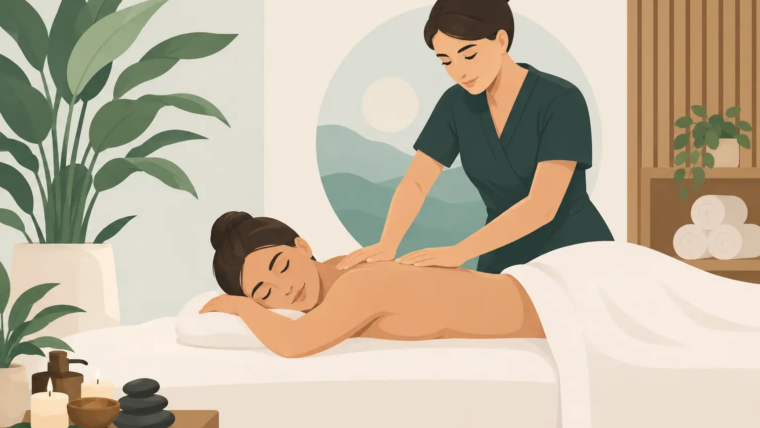
Massage and body therapies may help when muscle tightness, stress or restricted movement is making comfortable posture difficult. Remedial massage, deep tissue massage, myofascial release and trigger point therapy can be selected according to your presentation and tolerance. Relaxation massage may be more suitable when stress and poor recovery are the main contributors.
These treatments work best as part of an individual plan, rather than as a one-off attempt to ‘fix’ posture. A practitioner can consider areas that feel overloaded, patterns in daily activity and the type of movement that may support longer-term change. In some cases, gentler care is more appropriate than deep pressure, particularly if you are highly sensitive, fatigued or experiencing acute pain.
At Herbal Ayurveda and Yoga Clinic in Adelaide, care is guided by an understanding that posture concerns are rarely isolated from lifestyle, stress and recovery. A tailored consultation can help identify practical next steps that suit your body and routine.
Know when to seek further assessment
Mild stiffness that improves with movement is common. However, posture should not be used to explain away significant symptoms. Seek assessment from an appropriate health professional if you have severe or worsening pain, numbness, tingling, weakness, unexplained weight loss, fever, dizziness, pain after a fall or accident, or changes in bladder or bowel control.
Persistent pain that does not improve, disrupts sleep or limits work and daily activities also deserves individual attention. Some conditions require medical investigation, physiotherapy or other treatment alongside complementary care. A responsible plan recognises those boundaries.
Make the changes small enough to keep
Posture correction is usually less about one dramatic adjustment and more about the habits repeated across a week. Set a reminder to stand and move, place your screen more thoughtfully, practise a few minutes of gentle yoga, and notice when stress is tightening your body. Choose one or two changes first, then build from there.
Your body does not need to look perfect to feel more supported. With patient attention, regular movement and care that respects your individual needs, it can become easier to sit, stand and move through the day with greater comfort.